How the insulated body is made, and how different cooling methods fit different transport needs. If you are shortlisting refrigerated truck body manufacturers or comparing one refrigerated truck company to another, these specs help you check what really matters.
1. Why Refrigerated Trucks Matter
1.1 What a refrigerated truck is
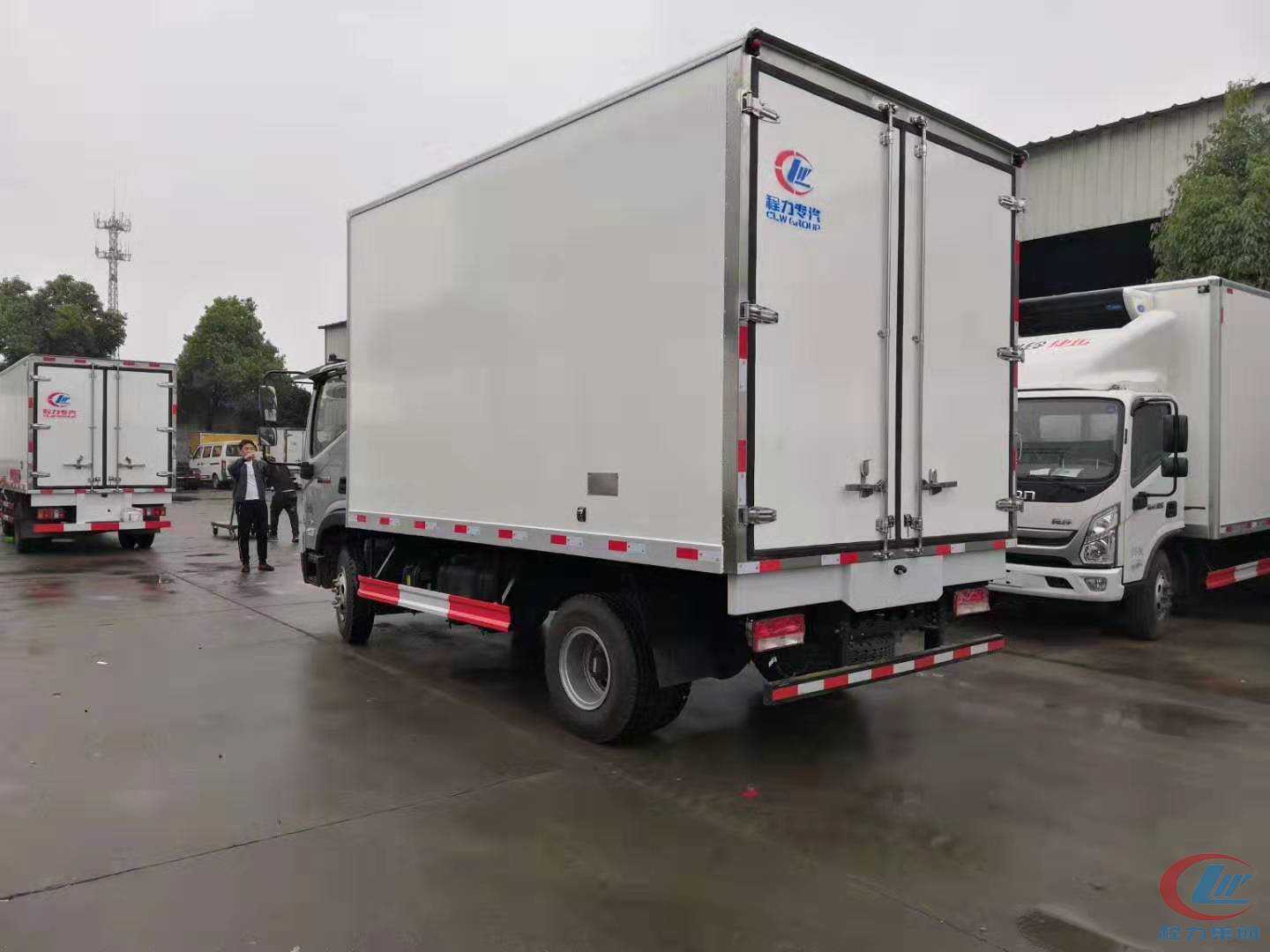
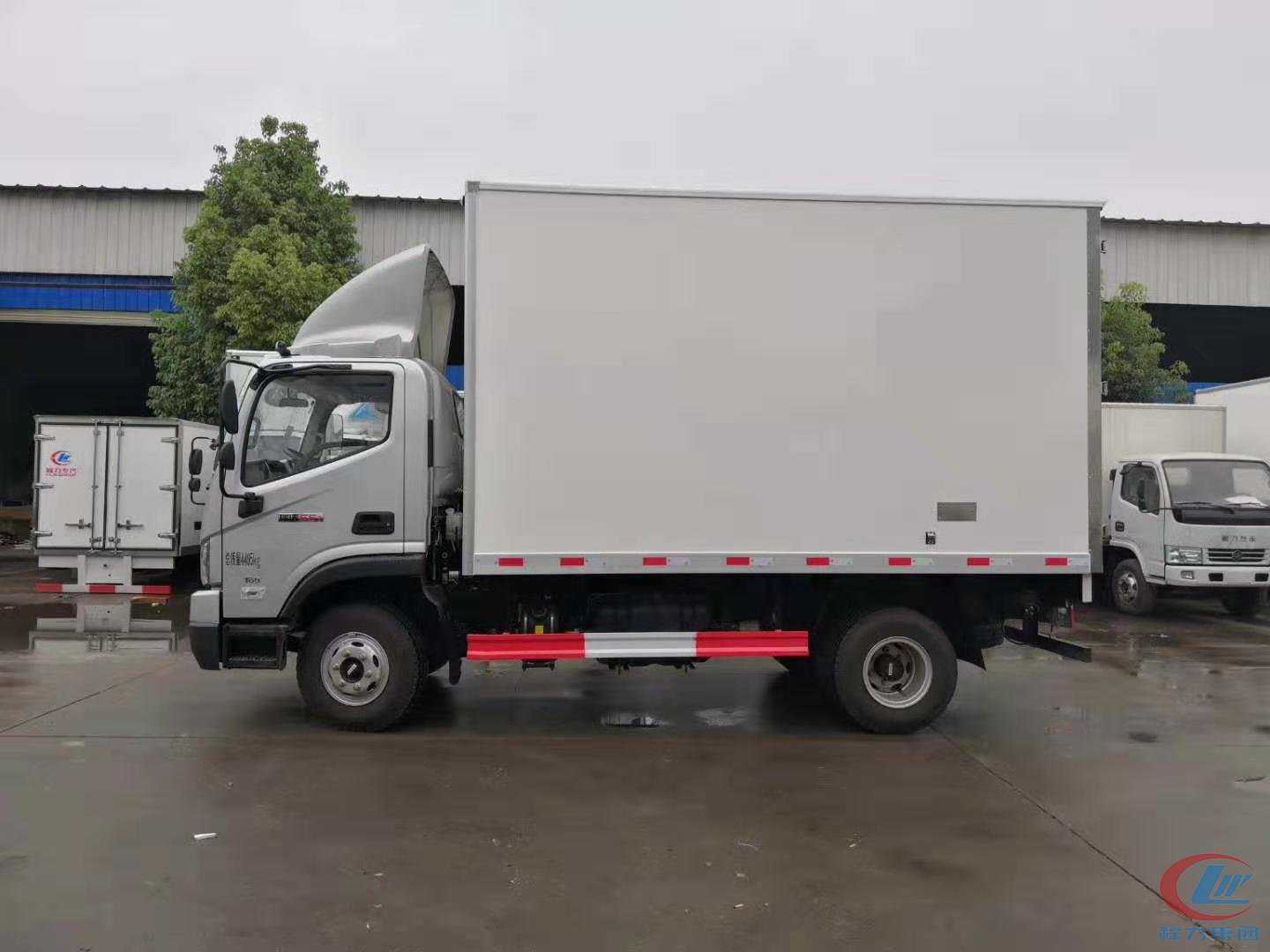
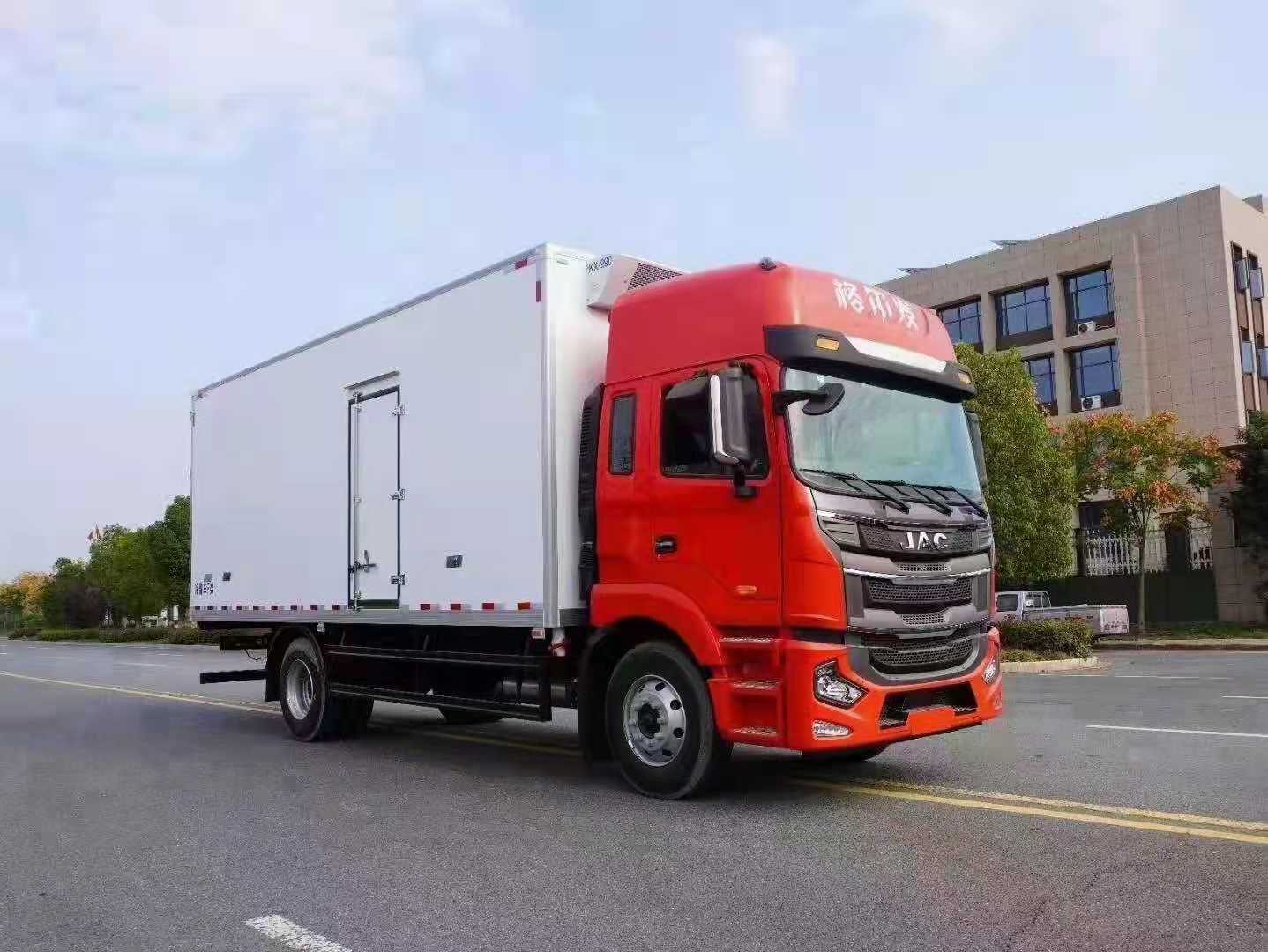
A refrigerated truck is a closed van equipped with an insulated compartment and a refrigeration unit, used for transporting frozen or fresh goods. If you are sourcing an isuzu refrigerated truck, this definition is the same—the key is the insulated compartment plus the refrigeration system.
1.2 What conditions it must maintain
Its core function is to maintain specific temperature, humidity, and ventilation conditions for goods during transportation to ensure the quality of perishable goods. This is also why buyers often compare a full truck vs a refrigerated truck body for sale when they already have a chassis.
2. How the Refrigerated Truck Is Built and Configured
2.1 Body manufacturing: vacuum + hydraulic integrated molding
The body is manufactured using a vacuum adsorption and hydraulic adsorption integrated molding production line, with sandwich composite bonding.
The thermal insulation performance meets the national Class A standard.
2.2 Panel materials and thickness: fiberglass + polyurethane (8 cm)
The inner and outer wall panels are made of high-quality domestic fiberglass (non-light-absorbing, good heat insulation, high hardness, and oxidation resistance).
The middle insulation layer is polyurethane, and the thickness of the body is 8CM.
2.3 Floor, sealing, and accessories
The floor is made of aluminum checkered plate.
The door edge strips are made of labyrinth rubber sealing strips.
Body accessories include aluminum alloy edging, stainless steel corner protectors, stainless steel door locks, stainless steel door frames and hinges, and energy-saving LED lighting inside the body.
2.4 Refrigeration unit brand options
Refrigeration units can be equipped with other brands such as Xinghui, Huatai, Hanyuan, Bingsen, Kaixue, Carrier, and Thermo King. This is a common configuration point you can confirm with any refrigerated truck company before you place an order.
3. Types of Refrigerated Trucks by Refrigeration Method
3.1 Vapor compression refrigerated truck (mainstream type)
This is currently the most widely used main vehicle type. It is equipped with a vapor compression refrigeration unit, allowing for automatic temperature control.
It is suitable for short, medium, and long-distance transport, or for transporting special refrigerated goods.
Advantages include good cabin insulation, a small and lightweight refrigeration unit, high safety and reliability, and a low malfunction rate.
Commonly used refrigerants include R134A and R404A.
3.2 Refrigerated truck with frozen plates (cold plates)
These vehicles utilize freezing plates (cold plates) with a certain cold storage capacity for refrigeration.
Advantages include stable interior temperature, noiseless refrigeration, fewer malfunctions, simple structure, and lower investment costs.
Disadvantages include limited refrigeration time, typically limiting use to short- and medium-distance road transport, and making them commonly used for air transport of precious fruits, seafood, and other fresh foods.
3.3 Liquid nitrogen refrigerated truck
These vehicles use liquid nitrogen refrigeration, which is simple, requires little initial investment, cools quickly, and effectively preserves food quality.
It is also noiseless and lightweight.
Disadvantages are the high cost of liquid nitrogen, difficulties in resupply during transport, and the need for large liquid nitrogen containers for long-distance transport, which reduces cargo capacity.
3.4 Dry ice refrigerated truck
Dry ice (solid carbon dioxide) refrigeration is simple, has low investment costs, low failure rate and maintenance costs, and is noiseless.
However, the temperature inside the carriage is not uniform, the cooling speed is slow and the time is long, and the cost of dry ice is also relatively high.
4. Next Steps to Specify the Right Refrigerated Truck
4.1 Match refrigeration method to distance and cargo
Start by choosing the refrigeration method based on transport distance and the nature of the goods.
Vapor compression works for short, medium, and long routes, while frozen plates are limited by refrigeration time.
4.2 Lock the body structure and configuration list
Confirm the body structure details: fiberglass panels, polyurethane insulation, 8CM thickness, aluminum checkered floor, and labyrinth rubber sealing strips.
Then confirm the accessories and the refrigeration unit brand options (Xinghui, Huatai, Hanyuan, Bingsen, Kaixue, Carrier, Thermo King). This checklist works whether you are buying a complete isuzu refrigerated truck or selecting a refrigerated truck body for sale to mount on your own chassis.
Quick Reference Table
Item | Spec / Option | Notes |
|---|---|---|
Body manufacturing | Vacuum + hydraulic integrated molding | Sandwich composite bonding |
Insulation performance | National Class A standard | As stated |
Panels | Domestic fiberglass inner/outer | Non-light-absorbing, hard, oxidation resistant |
Insulation layer | Polyurethane | Body thickness 8CM |
Floor | Aluminum checkered plate | Durable cargo floor |
Door sealing | Labyrinth rubber sealing strips | Sealing design as stated |
Accessories | Aluminum edging, stainless protectors/locks/hinges, LED | Listed configuration |
Cooling methods | Vapor compression / cold plates / liquid nitrogen / dry ice | Different pros/cons |
Common refrigerants | R134A, R404A | For vapor compression type |
Unit brands | Xinghui, Huatai, Hanyuan, Bingsen, Kaixue, Carrier, Thermo King | Optional brands |